 BELTOWER BELTOWER
Making and Re-Playing RecordingsBeltower can make data recordings, of the striking, of up to 50,000 rows, including free-strike mode, and the recording can be saved, loaded, and subsequently re-played and displayed in the striking report. Hand/back strokes will be recorded independently for each bell and can, optionally, be saved, played and displayed. Recordings include the calls Look To.., Go, Bob, Thats All etc. with editable method voices, and the bells can be re-played on a different combination of bells (eg. the front 6, the back 6 or whatever) and at any pitch, the same as Beltower's normal ringing. The row number and the method name are shown in the status bar and you can scroll to any row (using the mouse wheel as well), and play-back from there. The title defaults to the date and time, but, using the Recording Details Editor, you can change it and add information such as the place, occasion, members of the band or any other comments. | ||
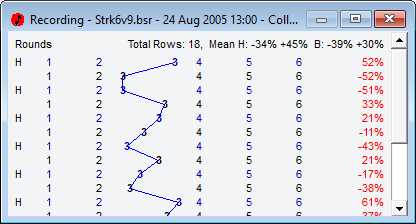
Striking ReportThe Striking Report is a graphical representation of a striking recording, with fault assessment. Where the speed changes, you can format the report on a row-by-row basis, instead of collectively. There are two types of fault assessment (individual and whole band), and the analysis can also be saved to file, for detailed external review. Screen Shot 1shows a single ringer striking irregularly, 'Rounds' where it would normally show the method name, the re-play cursor on the 4th row, and the individual's early/late striking assessment with the averages at the top.The summary at the top shows the averages (mean) separately for the early and late blows at hand and back strokes, enabling users to quantify their improvements as they reduce the averages. |
 |
|
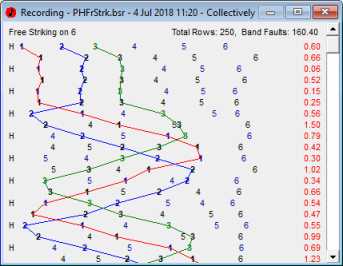
2 ringers bells (hand bells)will be assessed for the whole band. Blue and green lines can be shown, but individual faults can only be shown for a single bell.Screen Shot 2shows the whole band assessed as such, highlighting weaknesses. Blue, green and red lines can be shown for up to 3 ringers bells. |
 |
|
Audio RecordingsYou can take the sound output from the head-phone socket, via an audio cable to the line-in socket, and make an audio recording using Windows Sound Recorder. This can be saved in WAV format and even, if required, compressed into .mp3 format using free software such as RazorLame. | ||
Further Analysis using CAS SoftwareRecordings can be saved in Lowndes format for more detailed analysis using CAS software by Mark B Davies, included on the CD. | ||
